
Piece
Unknown Artist
17th–18th century
Medium
Silk
Dimensions
14 1/4 x 4 1/2 in. (36.20 x 11.43 cm)
Classification
Textiles-Woven
Culture
China
Department
Asian Art
Museum
Metropolitan Museum of Art, New York, NY
Credit
Anonymous Gift, 1946
Accession Number
46.133.61
Rights
Public Domain
Art Historical Context
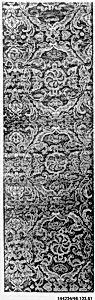
This exquisite silk textile fragment, dating to China's 17th–18th century during the Qing dynasty, exemplifies pinnacle of imperial weaving craftsmanship. Titled simply "Piece," it measures a slender 14¼ x 4½ inches, suggesting it may have been part of a larger garment, robe sash, or decorative band. Chinese silk production, renowned worldwide since ancient times via the Silk Road, reached new heights in this era, with weavers creating luxurious fabrics for the elite using intricate looms that produced shimmering patterns through satin, twill, or supplementary weft techniques. As a woven textile, this work highlights the technical virtuosity of anonymous artisans who manipulated silk threads to achieve depth, luster, and motifs often inspired by nature, auspicious symbols, or courtly motifs—hallmarks of Qing opulence. Silk's cultural importance extended beyond beauty; it symbolized wealth, status, and imperial power, often reserved for dragon robes or festival attire. Donated anonymously to the Metropolitan Museum of Art in 1946, this piece preserves a glimpse into everyday luxury from a golden age of Asian textile arts, inviting us to marvel at the skill of hands long past.