
Piece (one of 116)
Unknown Artist
19th century
Medium
Cotton
Dimensions
3 3/4 x 6 1/4 inches 9.5 x 15.9 cm
Classification
Textiles-Printed
Culture
German
Department
European Sculpture and Decorative Arts
Museum
Metropolitan Museum of Art, New York, NY
Credit
Rogers Fund, 1909
Accession Number
09.50.340
Rights
Public Domain
Tags
Art Historical Context
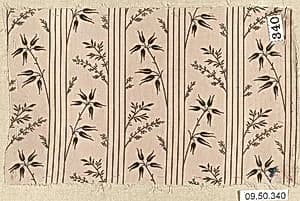
This modest yet exquisite cotton textile fragment, titled *Piece (one of )*, hails from 19th-century Germany and measures just 3 3/4 x 6 1/4 inches. Produced by an unknown artist, it exemplifies textiles from the era, likely featuring a delicate leaf motif that evokes the natural world—a common theme in decorative arts. Acquired through the Rogers Fund in 1909 and housed in the Metropolitan Museum of's Department of European Sculpture and Decor Arts, this piece is classified as a printed textile, showcasing the precision of block-printing or early mechanical techniques on fine cotton cloth. In the 19th century, German textile production flourished amid the Industrial Revolution, blending artisanal craftsmanship with emerging technologies. Printed cottons like this were prized for clothing, furnishings, and upholstery, reflecting a growing middle-class appetite for affordable, nature-inspired patterns. The leaf design may nod to Romanticism's reverence for flora, symbolizing renewal and the organic beauty celebrated in European design. As part of a larger group of 116 fragments, this work offers a window into everyday luxury and the evolution of decorative textiles. Visitors can appreciate how such small-scale innovations influenced broader fashion and interior trends, preserving a slice of Germany's rich textile heritage.