
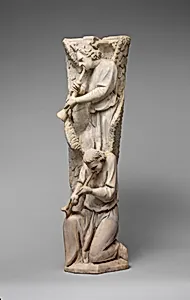
Pilaster of Angels Sounding Trumpets from the Parapet of a Pulpit
1302–10
Medium
Marble (Lunense from Carrara), traces of paint
Dimensions
Overall: 33 5/8 x 9 1/8 x 7 in. (85.4 x 23.2 x 17.8 cm)
Classification
Sculpture-Stone
Culture
Central Italian
Department
Medieval Art
Museum
Metropolitan Museum of Art, New York, NY
Credit
Frederick C. Hewitt Fund, 1910
Accession Number
10.203.2
Rights
Public Domain
Tags
Art Historical Context
Nestled in the Medieval Art collection of the Metropolitan Museum of, this Pilaster of Angels Sounding Trumpets a masterful fragment from the parapet of a pulpit sculpted by Giovanni Pisano between 1302 and 1310. Giovanni, a leading Central Italian artist and son of the renowned Nicola Pisano, worked during the late Gothic period, blending classical influences with expressive northern Gothic dynamism. This piece likely originated from the celebrated pulpit in Pisa Cathedral, where Pisano's innovative designs elevated pulpits from simple platforms to dramatic ensembles of narrative reliefs and freestanding figures. Carved from fine Lunense marble quarried in Carrara—prized for its luminous white translucency and ease of carving—the pilaster depicts angels triumphantly blowing trumpets, evoking biblical scenes of divine proclamation, such as the Last Judgment. Faint traces of original paint hint at the vivid polychromy that once brought these ethereal beings to life, a common medieval technique to enhance realism and spiritual impact. At just over 33 inches tall, the compact form showcases Pisano's virtuoso handling of drapery folds and twisting poses, infusing stone with rhythmic energy and emotional depth. This sculpture exemplifies the Pisano workshop's role in transforming Italian religious art, bridging Romanesque solidity with Gothic grace and inviting worshippers to contemplate heavenly music amid earthly sermons. A gift to the Museum via the Frederick C. Hewitt Fund in 1910, it remains a poignant testament to early 14th-century devotion and artistry.