
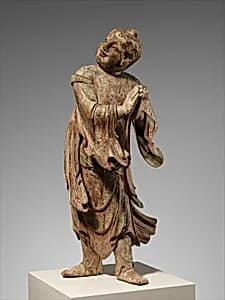
明 彩繪木雕善財童子像(椴木胎)|Pilgrim Sudhana (Shancai tongzi)
Unknown Artist
late 15th–early 17th century
Medium
Wood (linden) with pigment; single woodblock construction
Dimensions
H. 27 1/2 in. (69.9 cm); W. 12 in. (30.5 cm); D. 10 in. (25.4 cm)
Classification
Sculpture
Culture & Period
China · Ming dynasty (1368–1644)
Department
Asian Art
Museum
Metropolitan Museum of Art, New York, NY
Credit
Gift of Abby Aldrich Rockefeller, 1942
Accession Number
42.25.6
Rights
Public Domain
Tags
Art Historical Context
This exquisite wooden sculpture from China’s Ming dynasty (1368–1644) depicts Shancai tongzi, or Pilgrim Sudhana, a beloved figure in Buddhist lore. Carved from a single block of linden wood and once vividly painted, the youthful pilgrim stands with hands clasped in reverence, embodying innocence and spiritual determination. Created between the late and early seventeenth centuries, the figure reflects the era’s flourishing tradition of devotional sculpture made for temples and private altars. Sudhana’s story comes from the Avatamsaka Sutra, in which the boy undertakes a quest to visit fifty-three teachers in search of enlightenment. His image was especially popular during the Ming period, when Buddhist practice blended with popular devotion and domestic worship. The sculpture’s compact size—roughly twenty-seven inches tall—suggests it was intended for personal veneration rather than large temple settings. The single-woodblock technique demonstrates the carver’s skill in capturing flowing robes and a gentle, youthful expression from one piece of timber. Traces of original pigment hint at how brightly colored such figures once appeared, bringing sacred narratives vividly to life for worshippers. Now in the Metropolitan Museum’s collection, this work offers a quiet window into Ming Buddhist artistry and faith.