
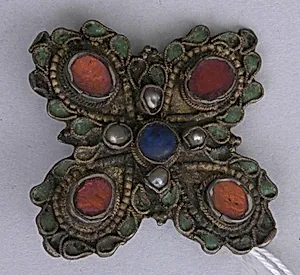
Pin
Unknown Artist
18th century
Medium
Silver
Dimensions
H. 5/16 in. (0.8 cm) W. 1 3/4 in. (4.4 cm) D. 1 3/4 in. (4.4 cm) Wt. 0.3 oz. (8.5 g)
Classification
Jewelry
Department
Islamic Art
Museum
Metropolitan Museum of Art, New York, NY
Credit
Gift of J. Pierpont Morgan, 1917
Accession Number
17.192.70
Rights
Public Domain
Tags
Art Historical Context
This delicate silver pin, crafted by an unknown artist in the18th century, exemplifies refined metalworking traditions of Islamic art. Measuring just 5/16 inch in height but expanding to 1 3/4 inches in width and, its petite scale—under half an ounce—suggests it was designed for personal adornment, perhaps securing garments, veils, or turbans. The use of silver, a favored medium in Islamic jewelry, allowed for intricate techniques like chasing, engraving, or filigree, though the exact decoration remains a testament to the artisan's skill in creating functional yet elegant objects. In the 18th century, Islamic jewelry from regions like the Ottoman Empire, Persia, or North Africa often blended utility with symbolism, serving as status symbols or protective talismans inscribed with prayers or motifs. Pins like this one highlight the era's emphasis on portability and everyday luxury, reflecting broader cultural values of modesty and refinement in personal ornamentation. Such pieces were integral to daily life, fastening flowing robes or enhancing attire during social or religious occasions. A generous gift from J. Pierpont Morgan in 1917, this pin now graces the Metropolitan Museum of Art's Islamic Art department, offering visitors a glimpse into the sophisticated craftsmanship of a vibrant artistic tradition.