
Pitcher
Unknown Artist
1830–70
Medium
Parian porcelain
Dimensions
4 1/4 x 4 5/8 x 3 3/8 in. (10.8 x 11.7 x 8.6 cm)
Classification
Pitcher
Culture
American
Department
The American Wing
Museum
Metropolitan Museum of Art, New York, NY
Credit
Gift of Dr. Charles W. Green, 1947
Accession Number
47.90.90
Rights
Public Domain
Tags
Art Historical Context
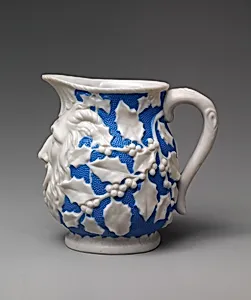
Nestled in The American Wing of the Metropolitan Museum Art, this petite Parian porcelain pitcher ( 1/4 x 4 5/8 x 3 3/8 in.), crafted by an unknown American artist between 1830 and 1870, embodies the refined domestic artistry of mid-19th-century America. Gifted by Dr. Charles W. in 1947, its delicate form—adorned with motifs of and expressive faces—suggests both functionality for serving and ornamental charm for the Victorian tabletop. Parian porcelain, unglazed and matte-white like fine marble from the Greek island of Paros, gained popularity in the United States during this era for its classical elegance and affordability compared to imported wares. American potteries, inspired by English techniques, produced these pieces to evoke neoclassical ideals, blending utility with subtle sculptural appeal. The fruit and faces decorations likely highlight abundance and whimsy, reflecting the era's fascination with nature and portraiture in everyday objects. This unassuming pitcher offers a window into antebellum American life, where such ceramics symbolized gentility and craftsmanship amid growing industrialization. Its survival speaks to the enduring value of humble yet artful household treasures.