
Plaque
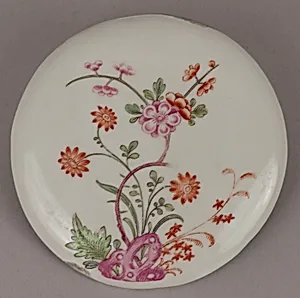
Medium
Hard-paste porcelain
Dimensions
Diameter: 2 7/8 in. (7.3 cm)
Classification
Ceramics-Porcelain
Culture
Austrian, Vienna
Department
European Sculpture and Decorative Arts
Museum
Metropolitan Museum of Art, New York, NY
Credit
Gift of R. Thornton Wilson, in memory of Florence Ellsworth Wilson, 1954
Accession Number
54.147.89
Rights
Public Domain
Tags
Art Historical Context
This delicate porcelain plaque, created around 1725 during the Claudius Innocentius du Paquier period in Vienna, exemplifies early European mastery of hard-paste porcelain translucent, durable material long perfected in China and first replicated on the continent at Meissen a decade earlier. Du Paquier's Vienna factory, founded in 8 with imperial support, was Austria's pioneering porcelain venture, blending technical innovation with ornate decoration to rival Saxony's output. Measuring just 2⅞ inches in diameter, this petite circular piece was likely intended as a refined decorative object for affluent homes, showcasing the era's fascination with luxury ceramics. Adorned with intricate motifs of flowers and leaves, the plaque reflects the budding Rococo style's love for naturalistic, asymmetrical floral designs that evoked the elegance of nature indoors. Hard-paste porcelain's strength allowed for fine molding and vibrant overglaze enameling, techniques that highlighted the factory's experimental spirit amid trade secrets smuggled from Asia. Today, housed in The Metropolitan Museum of Art's European Sculpture and Decorative Arts Department as a 1954 gift, it stands as a testament to Vienna's brief but brilliant porcelain golden age before the factory's closure in 1744.
About the Artist
Claudius Innocentius Du Paquier period|Vienna ( |Austrian) · |1718 – |1744
|1718–1744