
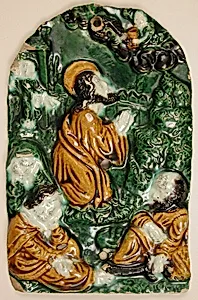
Plaque, Christ and Disciples at Gethsemane
Unknown Artist
ca. 1480
Medium
Earthenware, glazed & polychrome (Hafner ware)
Dimensions
Overall: 7 9/16 x 4 13/16 x 5/8in. (19.2 x 12.2 x 1.6cm)
Classification
Ceramics
Culture
German
Department
Medieval Art
Museum
Metropolitan Museum of Art, New York, NY
Credit
Bequest of R. Thornton Wilson, in memory of his wife, Florence Ellsworth Wilson, 1977
Accession Number
1977.216.61
Rights
Public Domain
Tags
Art Historical Context
This exquisite earthenware plaque, titled *Christ and Disciples at Gethane*, dates to around 1480 and hails from Germany, exemplifying the vibrant Hafner ware tradition. Crafted by an unknown artist, it measures just 7 9/16 x 4 13/16 inches, making it a compact yet striking devotional object. Hafner ware, produced by specialized potters (Hafner meaning "stove-maker"), features tin-glazed earthenware with polychrome decoration—vibrant glazes in blues, greens, yellows, and whites that brought biblical narratives to life in everyday settings like home altars or tiled stoves. Depicting the poignant New Testament moment in the Garden of Gethsemane—where Jesus prays in agony while his disciples slumber—the plaque captures late medieval piety amid the transition to the Renaissance. Such relief ceramics were popular in German households, blending religious instruction with artistic innovation. The molded figures and detailed glazing highlight the era's technical prowess, allowing mass production of affordable, spiritually resonant art for the devout middle class. Now housed in the Metropolitan Museum of Art's Medieval Art department (Bequest of R. Thornton Wilson, 1977), this piece offers a window into 15th-century German faith and craftsmanship, reminding visitors of art's power to make sacred stories intimately accessible.