
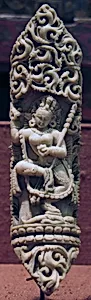
Plaque from a Tantric Ritual Apron
Unknown Artist
ca. 16th century
Medium
Bone
Dimensions
H. 6 in. (15.2 cm)
Classification
Bone
Culture
Tibet
Department
Asian Art
Museum
Metropolitan Museum of Art, New York, NY
Credit
Gift of Michael and Georgia de Havenon, 1987
Accession Number
1987.407.7
Rights
Public Domain
Tags
Art Historical Context
This exquisite bone plaque, dating to around the 16th century Tibet, forms part of a Tantric ritual apron—a sacred garment worn by Vajrayana Buddhist practitioners during esoteric ceremonies. Carved from human bone, a material revered for its embodiment of impermanence and cycle of life and death, the plaque stands just 6 inches (15.2 cm) high. Such artifacts, now housed in the Metropolitan Museum Art's Asian Art Departmentgift of Michael and Georgia Havenon, 1987), highlight the masterful Tibetan craftsmanship in low-relief carving, where intricate details likely evoke divine forms, including goddesses central to Tantric iconography. In 16th-century Tibet, Tantric Buddhism flourished, blending meditative visualization with ritual objects to harness spiritual energies. These aprons, assembled from multiple plaques like this one, were donned by initiates to embody fierce deities, transcending worldly illusions and invoking protection or enlightenment. The use of bone underscores profound cultural symbolism: it transforms remnants of the deceased into vessels of transcendence, reminding wearers of mortality's role in awakening. Today, this plaque offers visitors a glimpse into Tibet's mystical traditions, where art served not mere decoration but a portal to the divine. Its subtle, tactile medium invites contemplation on the sacred and the ephemeral.