
Plaque of Sword Pommel
Unknown Artist
ca. 1500
Medium
Bronze, gold
Dimensions
H. 2 5/8 in. (6.7 cm); W. 3 1/4 in. (8.3 cm); Wt. 4 oz. (113.4 g)
Classification
Swords-Accessories
Culture
Italian, Venice
Department
Arms and Armor
Museum
Metropolitan Museum of Art, New York, NY
Credit
Bashford Dean Memorial Collection, Funds from various donors, 1929
Accession Number
29.158.695
Rights
Public Domain
Tags
Art Historical Context
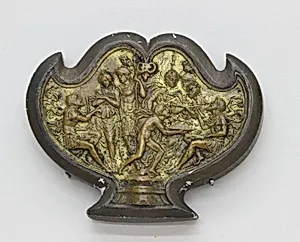
This exquisite *Plaque of Sword Pom*, crafted in Venice around 1500, exemplifies the Renaissance fusion of functionality and artistry in arms and armor. Made of bronze inlaid or gilded with gold, this yet weighty accessory—measuring just 2⅝ inches high and weighing 4 ounces—was likely attached to a sword hilt, a weapon into a status symbol for elite warriors or nobility. Its Venetian origin reflects the city's prowess as a maritime powerhouse and hub of luxury craftsmanship during the High Renaissance. The plaque's imagery, featuring male nudes alongside women, evokes the era's fascination with classical antiquity and humanist ideals. Such motifs—possibly drawn from mythology or bacchanalian revels—were common in decorative metalwork, blending eroticism with symbolism of strength and vitality. The intricate chasing and gilding techniques highlight Venetian goldsmiths' mastery, where gold accents heightened the piece's opulence, catching light to dazzle in torchlit halls or on the battlefield. Housed in The Metropolitan Museum of Art's Bashford Dean Memorial Collection, this artifact offers a glimpse into Renaissance Italy's martial culture, where even sword fittings became canvases for sensual, life-affirming art. A testament to Venice's enduring legacy in the decorative arts.