
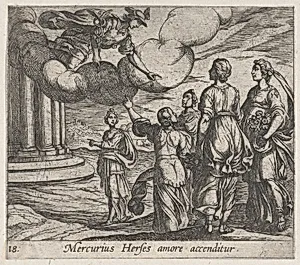
Plate 18: Mercury Falling in love with Herse (Mercurius Herses amore accenditur), from Ovid's 'Metamorphoses'
1606
Medium
Etching
Dimensions
sheet: 12 13/16 x 20 1/2 in. (32.5 x 52 cm) plate: 4 1/8 x 4 3/4 in. (10.5 x 12 cm)
Classification
Prints
Department
Drawings and Prints
Museum
Metropolitan Museum of Art, New York, NY
Credit
The Elisha Whittelsey Collection, The Elisha Whittelsey Fund, 1951
Accession Number
51.501.3869
Rights
Public Domain
Tags
Art Historical Context
Behold Plate 18 from Antonio Tempesta's captivating series of etchings illustrating Ovid's *Metamorphoses*, published in 1606. This scene depicts Mercury, the swift-footed messenger god, struck by love for Herse, one of the daughters of King Cecrops in ancient Greek myth. As recounted in Ovid's epic poem, Mercury descends from the heavens, his heart inflamed by the beautiful maiden amid a moment of divine vulnerability. Tempesta, a prolific Italian Mannerist artist (1555–1630), masterfully captures this pivotal episode, blending classical mythology with the dramatic flair of early 17th-century Italian art. Crafted as an etching—a technique where acid bites into a metal plate to create intricate lines— this print measures a modest plate size of 4 1/8 x 4 3/4 inches, yet its sheet extends to 12 13/16 x 20 1/2 inches, allowing for generous margins typical of collector's editions. Tempesta's series of 138 plates popularized Ovid's tales across Europe, making ancient stories accessible through affordable, reproducible art. The focus on Mercury and male figures underscores themes of desire and transformation central to the *Metamorphoses*. Housed in the Metropolitan Museum of Art's Drawings and Prints department, thanks to The Elisha Whittelsey Collection (1951), this work exemplifies the Renaissance revival of classical narratives, inviting visitors to ponder how gods' passions mirror human emotions. A gem for mythology enthusiasts!
About the Artist
Antonio Tempesta · 1555–1630
Antonio Tempesta (1555–1630), known as 'Il Tempestino,' was a Florentine painter and printmaker whose extraordinary output of approximately 1,700 etchings made him one of the most influential printmakers of the early Baroque period. Born in Florence and trained under Santi di Tito and the Flemish master Joannes Stradanus, he enrolled in the Accademia del Disegno in 1576 before relocating to Rome i...