
Plate
second half 18th century
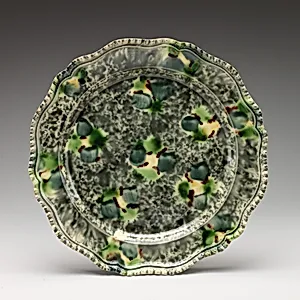
Medium
Earthenware
Dimensions
Diameter: 9 3/8 in. (23.8 cm)
Classification
Ceramics-Pottery
Culture
probably British, Staffordshire
Department
European Sculpture and Decorative Arts
Museum
Metropolitan Museum of Art, New York, NY
Credit
Rogers Fund, 1928
Accession Number
28.184.8
Rights
Public Domain
Art Historical Context
This elegant plate exemplifies the "Whieldon type" of earthenware pottery from Staffordshire, England, produced in the second half of the 18th century. Attributed to the innovative style of potter Thomas Whieldon, these pieces are celebrated for their vibrant, mottled glazes—often in tortoiseshell patterns of cream, green, and brown—that mimic more expensive porcelain while remaining affordable for middle-class households. Measuring 9 3/8 inches in diameter, this example showcases the practical yet decorative tableware that fueled Britain's ceramics boom. Staffordshire emerged as a pottery powerhouse during this era, with Whieldon pioneering lead-glazed earthenware techniques that enhanced durability and color vibrancy. His wares bridged utilitarian objects and fine art, influencing later giants like Josiah Wedgwood. Acquired through the Rogers Fund in 1928, this plate now graces the Metropolitan Museum of Art's European Sculpture and Decorative Arts collection, highlighting the region's role in democratizing luxury through mass production. A testament to 18th-century ingenuity, it invites visitors to appreciate how everyday items carried artistic flair, reflecting growing consumer tastes in Georgian Britain.
About the Artist
Whieldon type
Whieldon-type is not a single artist but a catalogue attribution used by museums for unmarked mid-18th-century Staffordshire earthenware in the manner of Thomas Whieldon (1719-1795), the celebrated English potter of Fenton Vivian. Whieldon perfected lead-glazed cream-colored earthenware streaked and dappled with metallic oxides - manganese browns, copper greens, cobalt blues - producing the mottle...