
Plate
ca. 1760
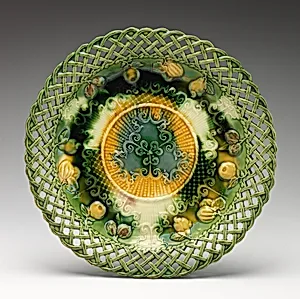
Medium
Glazed earthenware
Dimensions
Diameter: 9 5/8 in. (24.4 cm)
Classification
Ceramics-Pottery
Culture
British, Staffordshire
Department
European Sculpture and Decorative Arts
Museum
Metropolitan Museum of Art, New York, NY
Credit
Gift of Mrs. Russell S. Carter, 1944
Accession Number
44.39.25
Rights
Public Domain
Art Historical Context
This elegant plate exemplifies the "Whieldon type" of ceramics, a hallmark of mid-18th-century Staffordshire associated with master potter Thomas Whieldon (1719–1795). Produced around 1760, it measures 9⅝ inches in diameter and crafted from glazed earthenware—a durable, low-fired clay body coated with a glossy lead glaze that allowed for vibrant, affordable decoration. Whieldon's factory innovations made such pieces accessible to the growing middle class, bridging utilitarian tableware and artistic expression during Britain's burgeoning Industrial Revolution. The plate's significance lies in its representation of Staffordshire's dominance in European ceramics, where potters like Whieldon experimented with tortoiseshell or splashed glazes in earthy tones—mottled effects mimicking exotic luxury wares like Chinese porcelain. These techniques not only enhanced durability for daily use but also showcased playful color blending, reflecting Enlightenment-era tastes for nature-inspired whimsy. A gift to The Metropolitan Museum of Art in 1944, this plate invites us to appreciate how everyday objects fueled artistic and economic innovation, turning humble clay into coveted household treasures.
About the Artist
Whieldon type
Whieldon-type is not a single artist but a catalogue attribution used by museums for unmarked mid-18th-century Staffordshire earthenware in the manner of Thomas Whieldon (1719-1795), the celebrated English potter of Fenton Vivian. Whieldon perfected lead-glazed cream-colored earthenware streaked and dappled with metallic oxides - manganese browns, copper greens, cobalt blues - producing the mottle...