
Plate
ca. 1760
Medium
Faience (tin-glazed earthenware)
Dimensions
Diameter: 9 7/8 in. (25.1 cm)
Classification
Ceramics-Pottery
Culture
French, Marseilles
Department
European Sculpture and Decorative Arts
Museum
Metropolitan Museum of Art, New York, NY
Credit
Gift of R. Thornton Wilson, in memory of Florence Ellsworth Wilson, 1950
Accession Number
50.211.64
Rights
Public Domain
Art Historical Context
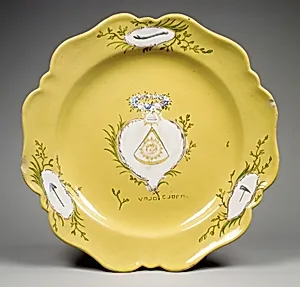
This elegant plate from the Veuve Perrin Factory in Marseilles, France, dates to around 1760 and exemplifies the vibrant world of 18th-century European ceramics. Produced during the Rococo era, when opulent tableware graced the dining rooms of the French elite, it measures 9 7/8 inches in diameter—perfect for serving delicate confections or displaying artistic flair. The factory, led by the widow ("veuve") Perrin, was a powerhouse in Marseilles, a key hub for faience production that rivaled finer porcelains from across the Channel. Crafted from tin-glazed earthenware, or faience, the plate showcases a technique where a tin-oxide glaze creates a smooth, white canvas ideal for bold polychrome decoration. This method, rooted in Italian maiolica traditions but perfected in France, made luxury ceramics accessible beyond royal courts. Marseilles faience often featured floral motifs, chinoiserie, or pastoral scenes, blending functionality with artistic whimsy and reflecting the era's love for playful elegance. Today, this piece resides in The Metropolitan Museum of Art's European Sculpture and Decorative Arts collection, a generous gift from R. Thornton Wilson in memory of Florence Ellsworth Wilson in 1950. It invites us to appreciate how everyday objects became canvases for cultural expression, bridging art and domestic life in pre-Revolutionary France.