
Plate
Unknown Artist
ca. 1745
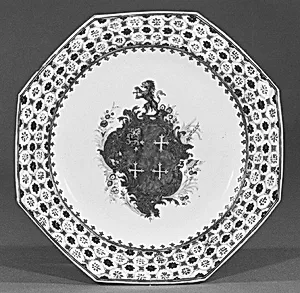
Medium
Hard-paste porcelain
Dimensions
Width (each side): 8 9/16 in. (21.7 cm)
Classification
Ceramics-Porcelain-Export
Culture
Chinese, for British market
Department
European Sculpture and Decorative Arts
Museum
Metropolitan Museum of Art, New York, NY
Credit
Helena Woolworth McCann Collection, Purchase, Winfield Foundation Gift, 1960
Accession Number
60.150.2
Rights
Public Domain
Tags
Art Historical Context
This elegant octagonal plate, crafted around 1745 in hard-paste porcelain by an unknown Chinese artist, exemplifies the exquisite export wares produced in Jingdezhen for the British market. Measuring 8 9/16 inches across side, its durable, translucent body—made from kaolin clay and fired at high temperatures—allowed for intricate designs that captured European fancy during the height of 18th-century trade. Adorned with lively lion motifs, the plate reflects the fusion of Chinese craftsmanship and Western tastes amid the Chinoiserie craze. Lions, symbols of strength and imperial power in Chinese culture, were popular in British armorial services, often customized for elite dinnerware. These pieces traveled vast distances via the East India Company, becoming coveted status symbols in grand European households. Today, housed in The Metropolitan Museum of Art's European Sculpture and Decorative Arts department as part of the Helena Woolworth McCann Collection, this plate offers a window into global exchange, blending Eastern technical mastery with Occidental desire for luxury.