
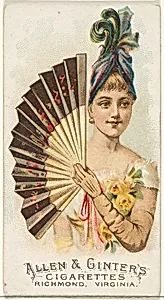
Plate 28, from the Fans of the Period series (N7) for Allen & Ginter Cigarettes Brands
Medium
Commercial color lithograph
Dimensions
Sheet: 2 3/4 x 1 1/2 in. (7 x 3.8 cm)
Classification
Prints|Ephemera
Department
Drawings and Prints
Museum
Metropolitan Museum of Art, New York, NY
Credit
The Jefferson R. Burdick Collection, Gift of Jefferson R. Burdick
Accession Number
63.350.201.7.28
Rights
Public Domain
Tags
Art Historical Context
This delicate commercial color lithograph from 1889 belongs to the “Fans of the Period” series (N7), issued by Allen & Ginter to promote their cigarette brands. Measuring just 2¾ by 1½ inches, the tiny card was designed as both advertisement and a collectible, reflecting the late-Victorian craze for trading cards that accompanied tobacco products. The image depicts a fashionable woman holding an ornate fan, part of a series that celebrated contemporary styles of this once-essential accessory. Produced through color lithography by Schumacher & Ettlinger, the print demonstrates how advances in commercial printing allowed vivid, affordable imagery to reach a broad public. In an era when women’s fashion emphasized elaborate accessories, the fan served as both a practical item and a symbol of grace and social status. By turning these objects into miniature portraits, Allen & Ginter cleverly linked their products to elegance and modernity. Today the card resides in the Metropolitan Museum’s Burdick Collection, where it offers a charming glimpse into nineteenth-century consumer culture and the early history of graphic advertising. Though created for everyday enjoyment, such ephemera now illuminate the artistic and social trends of their time.
About the Artist
Allen & Ginter|Schumacher & Ettlinger
Allen & Ginter, the pioneering American tobacco firm based in Richmond, Virginia, emerged around 1880 from the partnership of John F. Allen and Lewis Ginter, evolving from Allen's earlier John F. Allen & Company. Allen retired in 1882, succeeded by John Pope, yet the brand endured under Ginter's leadership, employing over 1,100 workers—mostly women—for hand-rolled cigarettes by 1886. Ginter, a Dut...