
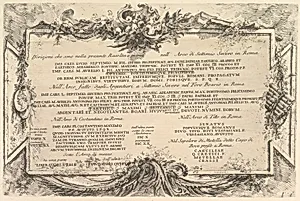
Plate 3: Inscriptions on Antiquities outside Rome with Index of Plates, from "Antichità Romane de' Tempi della Repubblica, e de' primi Imperatori"
ca. 1748
Medium
Etching
Dimensions
Plate: 9 5/16 × 14 1/8 in. (23.6 × 35.8 cm) Sheet: 13 1/16 × 18 15/16 in. (33.1 × 48.1 cm)
Classification
Prints
Department
Drawings and Prints
Museum
Metropolitan Museum of Art, New York, NY
Credit
Harris Brisbane Dick Fund, 1937
Accession Number
37.45.3(70)
Rights
Public Domain
Tags
Art Historical Context
Giovanni Battista Piranesi, the visionary 18th-century Venetian artist and architect, created this etching around 1748 as Plate 3 from his monumental series *Antichità Romane de' Tempi della Repubblica, e de' primi Imperatori*. This-volume work meticulously documents ancient Roman ruins and artifacts, capturing the grandeur of the Eternal City during the height of the Grand Tour era, when European elites traveled to Italy to study classical antiquity. Here, Piranesi presents detailed inscriptions carved on antiquities outside Rome, accompanied by an index of plates, offering visitors a scholarly glimpse into Republican and early Imperial epigraphy. Piranesi's mastery of etching shines in the intricate line work, where fine cross-hatching and dense textures evoke the weathered stone of ancient monuments. Measuring about 9½ by 14 inches on the plate, this print exemplifies his veduta style—topographical views infused with dramatic imagination—bridging documentary precision with romantic exaggeration to make ruins feel alive and monumental. Housed in the Metropolitan Museum of Art's Drawings and Prints department, this piece underscores Piranesi's enduring legacy as a preserver of history. His prints not only fueled Neo-Classical revival but also served as vital records before many sites deteriorated further, inviting us today to ponder Rome's lost splendor.
About the Artist
Giovanni Battista Piranesi · 1720–1778
Giovanni Battista Piranesi (1720–1778) was an Italian printmaker, architect, and antiquarian whose visionary etchings of Rome and imaginary prisons revolutionized architectural representation and profoundly influenced both Neoclassicism and Romanticism. Piranesi stands as one of the most important printmakers of the eighteenth century, fundamentally shaping European perceptions of ancient Rome an...