
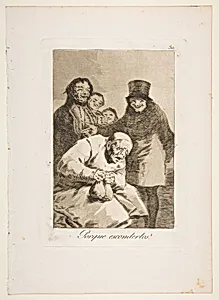
Plate 30 from "Los Caprichos": Why hide them? (Porque esconderlos?)
Medium
Etching, burnished aquatint, drypoint
Dimensions
Plate: 8 7/16 x 5 15/16 in. (21.4 x 15.1 cm) Sheet: 11 5/8 x 8 1/4 in. (29.5 x 21 cm)
Classification
Prints
Department
Drawings and Prints
Museum
Metropolitan Museum of Art, New York, NY
Credit
Gift of M. Knoedler & Co., 1918
Accession Number
18.64(30)
Rights
Public Domain
Tags
Art Historical Context
**Plate 30 from *Los Caprichos*: hide them? (Porque esconderlos?)** Francisco de Goya y Luc, a pioneering Spanish artist bridging the Enlightenment and Romanticism, created *Los Caprichos* 1799 as a bold series of 80 printsing the follies, superstitions, and hypocrisies of Spanish society. This etching, Plate 30, bears the provocative title *Porque esconderlos?* (" hide them?"), inviting viewers to ponder themes of concealment and revelation amid human vanity. Goya's work reflects the turbulent era of late 18th-century Spain, marked by political upheaval and the lingering shadow of the Inquisition, which nearly suppressed the series upon its release. Masterfully executed in etching, burnished aquatint, and drypoint, the print showcases Goya's innovative techniques. Burnished aquatint creates velvety tonal gradations, while drypoint adds sharp, expressive lines, lending a haunting intimacy to the 8 7/16 x 5 15/16 in. plate. These methods allowed Goya to produce affordable yet profound multiples, democratizing his social satire. Housed in the Metropolitan Museum of Art's Drawings and Prints department (gift of M. Knoedler & Co., 1918), it exemplifies his shift toward darker, more introspective visions that influenced modern art. With its focus on men and women, the image captures Goya's incisive wit, urging audiences to question societal norms. A timeless emblem of artistic rebellion, it remains a captivating draw for visitors exploring human nature's quirks.
About the Artist
Goya (Francisco de Goya y Lucientes) · 1746–1828
Francisco José de Goya y Lucientes (1746-1828) was a Spanish painter and printmaker considered the last of the Old Masters and the first of the moderns. Rising from modest provincial origins to become First Court Painter to Charles IV, Goya's career spanned the Enlightenment's optimism and the brutal Napoleonic invasion that shattered it. A mysterious illness in 1793 left him permanently deaf and ...