
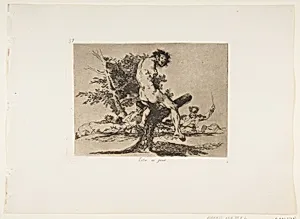
Plate 37 from "The Disasters of War" (Los Desastres de La Guerra): 'This is worse' (Esto es peor)
1810 (published 1863)
Medium
Etching, lavis, drypoint
Dimensions
Plate: 6 in. × 7 15/16 in. (15.3 × 20.2 cm) Sheet: 9 15/16 × 13 9/16 in. (25.3 × 34.4 cm)
Classification
Prints
Department
Drawings and Prints
Museum
Metropolitan Museum of Art, New York, NY
Credit
Purchase, Jacob H. Schiff Bequest, 1922
Accession Number
22.60.25(37)
Rights
Public Domain
Tags
Art Historical Context
Step into the grim reality captured in Plate 37, "This is worse" (Esto es peor), from de Goya's monumental series *The Disasters of War*Los Desastres de la Guerra Created around 1810 amid the Peninsular War—a brutal conflict between Napoleon's invading French forces and Spanish resistors—this etching is one of 82 prints Goya produced as a raw, unflinching chronicle of war's atrocities. Unpublished during his lifetime, the series finally reached the public in 1863, cementing Goya's legacy as a pioneer of socially critical art in the Romantic era. In this haunting plate, Goya confronts viewers with a scene of unimaginable horror, suggested by tags of male nudes amid barren trees—evoking lynching or mutilation against a stark landscape. Measuring just 6 × 7 15/16 inches on the plate, its intimate scale intensifies the visceral impact. Goya masterfully combined etching for precise lines, lavis (a toned wash) for shadowy depth, and drypoint for raw, expressive burrs, techniques that convey anguish with shocking immediacy and realism. Housed in the Metropolitan Museum of Art's Drawings and Prints department (acquired via the 1922 Jacob H. Schiff Bequest), this work transcends documentation to indict human savagery. Goya's bold gaze laid groundwork for modern war art, urging us to confront the "worse" truths of conflict that history—and conscience—cannot ignore.
About the Artist
Goya (Francisco de Goya y Lucientes) · 1746–1828
Francisco José de Goya y Lucientes (1746-1828) was a Spanish painter and printmaker considered the last of the Old Masters and the first of the moderns. Rising from modest provincial origins to become First Court Painter to Charles IV, Goya's career spanned the Enlightenment's optimism and the brutal Napoleonic invasion that shattered it. A mysterious illness in 1793 left him permanently deaf and ...