
Plate
Unknown Artist
1785–90
Medium
Porcelain
Dimensions
Diam. 9 in. (22.9 cm)
Classification
Plate
Culture
Chinese, for American market
Department
The American Wing
Museum
Metropolitan Museum of Art, New York, NY
Credit
Bequest of James T. Woodward, 1910
Accession Number
10.149.24
Rights
Public Domain
Tags
Art Historical Context
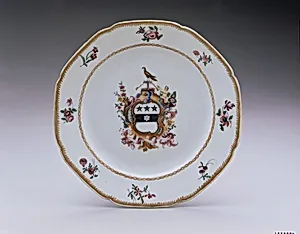
This elegant porcelain plate, crafted in China for the American market between 5 and 1790, exemplifies the height of 18th-century export porcelain artistry. Measuring 9 inches in diameter, it features central coat of arms surrounded by vibrant motifs of birds and flowers, in vivid overglaze enamels These decorative elements—delicate blooms and perched birds—reflect the Chinese porcelain makers' mastery of fine brushwork and color layering, techniques honed over centuries in imperial kilns like those at Jingdezhen. Displayed in The Metropolitan Museum of Art's American Wing, the plate highlights the burgeoning trade networks between post-Revolutionary America and China. Wealthy American merchants and elites commissioned such personalized wares, often emblazoned with family crests, as symbols of status and sophistication. This piece, bequeathed by James T. Woodward in 1910, underscores how global commerce brought Eastern luxury to New World tables, blending Chinese technical prowess with Western heraldry. Its cultural significance lies in bridging continents: a testament to early U.S. consumerism and the porcelain trade's role in shaping trans-Pacific exchange during a formative era. Visitors can appreciate how such everyday objects carried profound stories of ambition and artistry.