
Plate
Unknown Artist
1785–90
Medium
Porcelain
Dimensions
Diam. 9 in. (22.9 cm)
Classification
Plate
Culture
Chinese, for American market
Department
The American Wing
Museum
Metropolitan Museum of Art, New York, NY
Credit
Bequest of James T. Woodward, 1910
Accession Number
10.149.47
Rights
Public Domain
Tags
Art Historical Context
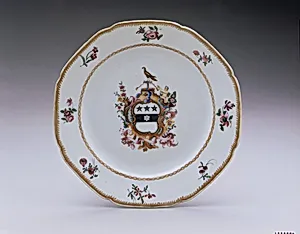
This elegant porcelain plate, crafted in China between 1785 and 1790 specifically for the American market, the height of 18th-century export porcelain trade. Measuring 9 inches in diameter, it features decorations of birds and a prominent coat arms—likely a customized family crest commissioned by a wealthy American patron. Such personalization was common, transforming standard Chinese wares into bespoke heirlooms that bridged Eastern craftsmanship with Western tastes. Porcelain, fired at high temperatures to achieve its translucent, resonant quality, was a prized luxury in the young United States, symbolizing status amid post-Revolutionary prosperity. Chinese artisans mastered underglaze blue decoration and overglaze enamels, techniques that allowed vibrant, intricate designs to endure daily use. This plate's presence in The Metropolitan Museum of Art's American Wing highlights the global networks of commerce that shaped early American material culture. Bequeathed by James T. Woodward in 1910, it stands as a tangible link to the era's elite dining rituals, where such pieces graced tables during pivotal moments in U.S. history. A testament to cross-cultural exchange, it invites us to ponder the unseen stories etched in its heraldic motifs.