
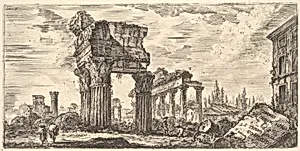
Plate 7: Temple of Jupiter Tonans (Jupiter the Thunderer). 1. Temple of Concord. (Tempio di Giove Tonans. 1. Tempio della Concordia.), from "Antichità Romane de' Tempi della Repubblica, e de' primi Imperatori"
ca. 1748
Medium
Etching
Dimensions
Plate: 5 1/4 × 10 9/16 in. (13.3 × 26.9 cm) Sheet: 13 1/16 × 18 7/8 in. (33.1 × 48 cm)
Classification
Prints
Department
Drawings and Prints
Museum
Metropolitan Museum of Art, New York, NY
Credit
Harris Brisbane Dick Fund, 1937
Accession Number
37.45.3(74)
Rights
Public Domain
Tags
Art Historical Context
Step into the grandeur of ancient Rome through Giovanni Battista Piranesi's *Plate 7: Temple of Jupiter Ton (Jupiter the Thunderer). 1. Temple of Concord*, an exquisite etching from his seminal series *Antichità Romane de' Tempi Repubblica, e de' primi Imperatori* (. 1748). This print captures the majestic ruins of two iconic temples on Rome's Capitoline Hill: the Temple of Jupiter Tonans, dedicated to the thunder-wielding king of the gods, and the nearby Temple of Concord, symbolizing harmony in the Republic's turbulent politics. Piranesi, a master of the veduta tradition, renders their towering columns and weathered facades with breathtaking precision, evoking the sublime power of antiquity. Created as an etching—a technique Piranesi perfected for its rich tonal depth and intricate linework—this 5¼ × 10⅝-inch plate (on a larger sheet) showcases his signature dramatic flair. He amplifies shadows and architectural scale to immerse viewers in Rome's layered history, blending archaeological accuracy with romantic imagination. Produced during the Enlightenment's fascination with classical ruins, these prints fueled the Grand Tour era, inspiring architects and travelers alike. Housed in the Metropolitan Museum of Art's Drawings and Prints department (Harris Brisbane Dick Fund, 1937), this work exemplifies Piranesi's enduring legacy: a bridge between past glory and 18th-century revival, reminding us how ruins whisper tales of empire, divinity, and time's relentless march.
About the Artist
Giovanni Battista Piranesi · 1720–1778
Giovanni Battista Piranesi (1720–1778) was an Italian printmaker, architect, and antiquarian whose visionary etchings of Rome and imaginary prisons revolutionized architectural representation and profoundly influenced both Neoclassicism and Romanticism. Piranesi stands as one of the most important printmakers of the eighteenth century, fundamentally shaping European perceptions of ancient Rome an...