
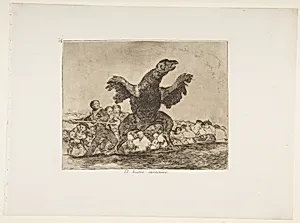
Plate 76 from "The Disasters of War" (Los Desastres de la Guerra): 'The carnivorous vulture' (El buitre carnívoro)
1814–15 (published 1863)
Medium
Etching, drypoint(?), burin, burnisher
Dimensions
Plate: 6 13/16 × 8 11/16 in. (17.3 × 22 cm) Sheet: 9 15/16 × 13 1/2 in. (25.2 × 34.3 cm)
Classification
Prints
Department
Drawings and Prints
Museum
Metropolitan Museum of Art, New York, NY
Credit
Purchase, Jacob H. Schiff Bequest, 1922
Accession Number
22.60.25(76)
Rights
Public Domain
Tags
Art Historical Context
Francisco de Goya’s *Plate 76* from his series *The Disasters of War* captures the brutal aftermath of the Peninsular War (1808–1814) between Spain and Napoleonic France. Created between 1814 and 1815 but withheld from public view until 1863, the series stands as one of the most unflinching artistic condemnations of conflict. Goya, already celebrated for his penetrating portraits and court scenes, turned here to printmaking to record the suffering of ordinary people caught in invasion, famine, and reprisal. The etching, enhanced with drypoint, burin, and burnisher, allowed Goya to achieve sharp lines and velvety shadows that heighten the emotional intensity of the image. The title *The carnivorous vulture* suggests a grim allegory in which a predatory bird—often read as a symbol of the occupying forces—preys upon the fallen, underscoring war’s dehumanizing cycle. Human figures and weapons dominate the composition, distilling the violence into stark, unforgettable visual language. Today the print remains a cornerstone of the Metropolitan Museum’s holdings in Drawings and Prints, reminding viewers of art’s power to bear witness long after the battlefield has grown quiet.
About the Artist
Goya (Francisco de Goya y Lucientes) · 1746–1828
Francisco José de Goya y Lucientes (1746-1828) was a Spanish painter and printmaker considered the last of the Old Masters and the first of the moderns. Rising from modest provincial origins to become First Court Painter to Charles IV, Goya's career spanned the Enlightenment's optimism and the brutal Napoleonic invasion that shattered it. A mysterious illness in 1793 left him permanently deaf and ...