
Plate (one of two)
ca. 1740
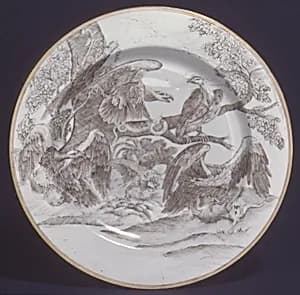
Medium
Hard-paste porcelain
Dimensions
Overall: 1 1/2 × 11 in. (3.8 × 27.9 cm)
Classification
Ceramics-Porcelain-Export
Culture
Chinese, for British market
Department
European Sculpture and Decorative Arts
Museum
Metropolitan Museum of Art, New York, NY
Credit
Helena Woolworth McCann Collection, Purchase, Winfield Foundation Gift, 1960
Accession Number
60.78.1
Rights
Public Domain
Tags
Art Historical Context
This elegant plate, one of a pair from around 1740, exemplifies the artistry of Chinese hard-paste porcelain crafted specifically for the British market.ributed to the Flemish painter Pieter Boel, renowned for his vivid depictions of animals and birds, the design likely draws from European influences adapted by skilled Chinese potters. Measuring just 1 1/2 by 11 inches, its delicate form and intricate bird motifs highlight the technical mastery of hard-paste porcelain—a durable, translucent material perfected in China centuries earlier and highly prized in Europe during the height of global trade. In the 18th century, Chinese export porcelain flooded European tables, blending Eastern craftsmanship with Western tastes in the Chinoiserie style. These plates, classified as export ceramics, were painted with overglaze enamels to capture Boel's naturalistic bird renderings, symbolizing exotic luxury for British collectors. Produced during the Qing dynasty's Qianlong era, when kilns like those in Jingdezhen innovated for international demand, such wares bridged cultures and fueled maritime commerce. Now part of the Metropolitan Museum of Art's Helena Woolworth McCann Collection, this piece invites us to appreciate the fusion of artistry and globalization—where a Flemish design soared across oceans on translucent porcelain wings.