
Plate (tagliere)
Unknown Artist
ca. 1530
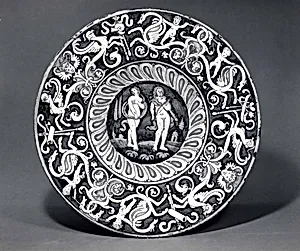
Medium
Maiolica (tin-glazed earthenware)
Dimensions
Diameter: 17 5/16 in. (44 cm)
Classification
Ceramics-Pottery
Culture
Italian, probably Deruta
Department
Robert Lehman Collection
Museum
Metropolitan Museum of Art, New York, NY
Credit
Robert Lehman Collection, 1975
Accession Number
1975.1.1031
Rights
Public Domain
Tags
Art Historical Context
This vibrant maiolica plate, known as a *tagliere* or large serving trencher, hails from Italy around 1530, likely produced in the renowned ceramics center of Deruta in Umbria. Crafted from tin-glazed earthenware it exemplifies the Renaissance technique of maiolica, where a tinacified glaze created a brilliant white surface ideal for vivid polychrome decoration fired at low temperatures. Measuring over 17 inches in diameter such platters were both functional kitchenware and display pieces for affluent households, blending utility with artistic splendor. The central scene draws from the ancient myth of Orpheus and Eurydice, capturing the lyre-playing hero's poignant journey to the underworld. Surrounded by male and female nudes, musical instruments, and evocative figures, the composition evokes themes of love, music's power, and classical antiquity—motifs revived during the Renaissance to celebrate humanism. Deruta's workshops were famed for such narrative pottery, often adorning everyday objects with mythological grandeur. Part of the Robert Lehman Collection at The Metropolitan Museum of Art since 1975, this plate highlights Italian ceramics' cultural prestige, bridging domestic life and high art in the 16th century. Visitors, imagine it laden with Renaissance feasts, its glossy figures gleaming under candlelight!