
Plate with the Presentation of David to Saul
Unknown Artist
629–630
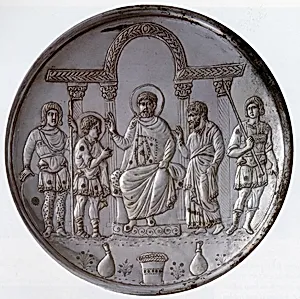
Medium
Silver
Dimensions
Overall: 10 11/16 x 1 9/16 in., 49.3oz. (27.2 x 4 cm, 1397g) foot: 4 5/8 x 9/16 in. (11.8 x 1.4 cm)
Classification
Metalwork-Silver
Culture
Byzantine
Department
Medieval Art
Museum
Metropolitan Museum of Art, New York, NY
Credit
Gift of J. Pierpont Morgan, 1917
Accession Number
17.190.397
Rights
Public Domain
Tags
Art Historical Context
Behold this exquisite silver plate, *Plate with the Presentation of David to Saul*, crafted by an unknown Byzantine artist around 629–630 CE. about 10½ inches in diameter and weighing nearly three pounds, this luxurious metalwork depicts a pivotal biblical scene from the First Book of Samuel: the young musician David being presented to King Saul, torment is soothed by David's harp-playing. Rendered with finely chased figures of kings and attendants, the plate captures the drama of divine favor and royal intrigue in a style typical of early Byzantine art—elegant, narrative-driven, and infused with religious symbolism. In the Byzantine Empire, silver vessels like this were prestige objects for elite banquets or liturgical use, showcasing advanced metalworking techniques such as hammering, engraving, and possibly gilding. Dating to the reign of Emperor Heraclius amid turbulent wars with Persia and the dawn of Arab conquests, it reflects the era's enduring Christian devotion and artistic sophistication. Such plates highlight Byzantium's role as a cultural bridge between antiquity and the medieval world. Now housed in the Metropolitan Museum of Art's Medieval Art department—thanks to a 1917 gift from J. Pierpont Morgan—this rare survivor offers a window into 7th-century opulence and faith. Visitors, imagine it gleaming on an imperial table, whispering ancient stories of heroism and melody.