
Pocket flask
Unknown Artist
1800–1860
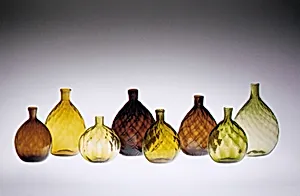
Medium
Blown pattern-molded glass
Dimensions
H. 5 3/8 in. (13.7 cm)
Classification
Pocket flask
Culture
American
Department
The American Wing
Museum
Metropolitan Museum of Art, New York, NY
Credit
Gift of Henry G. Schiff, 1980
Accession Number
1980.502.49
Rights
Public Domain
Art Historical Context
This charming pocket flask, crafted in America between 1800 and 1860, exemplifies the everyday artistry of early 19th-century glassmaking. Standing just 5 3/8 inches tall, its compact size made it perfect for personal portability—tucked into a gentleman's coat pocket for a discreet sip of spirits during travel, work, or social gatherings. Housed in The American Wing of the Metropolitan Museum of Art, it reflects the ingenuity of American craftsmen during a period of rapid industrialization and westward expansion. The flask's medium, blown pattern-molded glass, highlights a key technique of the era. Molten glass was blown into a hinged mold engraved with intricate patterns, creating textured surfaces like ribs, diamonds, or swirls without the need for costly cutting or engraving. This method allowed for affordable, mass-produced yet decorative objects, bridging utilitarian function with folk art aesthetics. Popular in New England and Mid-Atlantic glasshouses, such flasks were both practical and subtly stylish, often in vibrant colors though this example's hues are preserved in classic transparency. A gift to the Met from Henry G. Schiff in 1980, this anonymous masterpiece offers a window into American material culture—where even humble drinking vessels embodied pride in handmade quality amid growing factory production. Visitors, picture toasting to the young republic with one just like it!