
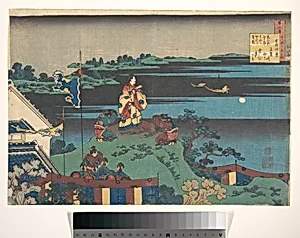
百人一首 宇波かゑとき 安部仲麿|Poem by Abe no Nakamaro, from the series One Hundred Poems Explained by the Nurse (Hyakunin isshu uba ga etoki)
1760–1849
Medium
Woodblock print; ink and color on paper
Dimensions
10 3/8 x 14 7/8 in. (26.4 x 37.8 cm)
Classification
Prints
Culture & Period
Japan · Edo period (1615–1868)
Department
Asian Art
Museum
Metropolitan Museum of Art, New York, NY
Credit
Henry L. Phillips Collection, Bequest of Henry L. Phillips, 1939
Accession Number
JP2940
Rights
Public Domain
Tags
Art Historical Context
This enchanting woodblock print by Katsushika Hokusai, a master of Japan's ukiyo-e tradition, captures the poem by Abe no Nakamaro from the renowned anthology *Hyakunin Isshu* (One Hundred Poems). Created during the Edo period (1615–1868), it belongs to the series *Hyakunin Isshu Uba ga Etoki* ("One Hundred Poems Explained by the Nurse"), where an elderly nurse vividly illustrates classical waka poems for listeners. Hokusai, famed for dynamic compositions like *The Great Wave*, here blends poetic nostalgia with his signature flair for nature and human emotion. The scene evokes longing under a luminous moon, with boats gliding through a misty landscape and figures evoking the traveler's exile. Abe no Nakamaro, an 8th-century diplomat stranded in China, penned his verse yearning for Japan's Mikasa Mountain—a theme of homesickness that resonates deeply in Japanese culture. Rendered in vibrant ink and color on paper (10 3/8 x 14 7/8 in.), the print showcases ukiyo-e's technical brilliance: precise woodblock carving allowed mass production, making high art accessible to everyday viewers. As part of the Metropolitan Museum of Art's Asian Art collection, this work highlights Edo Japan's fusion of literature and visual storytelling, inviting us to ponder the moon's timeless pull on the wandering heart.
About the Artist
Katsushika Hokusai · 1760–1849
Katsushika Hokusai (1760-1849) stands as one of history's most influential artists, a Japanese master who revolutionized the ukiyo-e woodblock print tradition and profoundly shaped Western art. Born in the Katsushika district of Edo (modern-day Tokyo) to an artisan family, Hokusai lived through nearly nine decades of extraordinary creative evolution, adopting over thirty different artistic names t...