
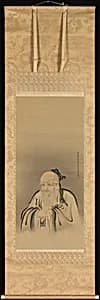
狩野探幽筆 神農・夏冬山水図|Portrait of Emperor Shennong
1665
Medium
One from a set of three hanging scrolls; ink and color on silk
Dimensions
41 1/2 x 18 3/16 in. (105.4 x 46.2 cm)
Classification
Paintings
Culture & Period
Japan · Edo period (1615–1868)
Department
Asian Art
Museum
Metropolitan Museum of Art, New York, NY
Credit
Charles Stewart Smith Collection, Gift of Mrs. Charles Stewart Smith, Charles Stewart Smith Jr., and Howard Caswell Smith, in memory of Charles Stewart Smith, 1914
Accession Number
14.76.27
Rights
Public Domain
Tags
Art Historical Context
This exquisite hanging scroll, *Portrait of Emperor Shenn*, painted by Kano Tan'yū 1665, is one of a set of three from Japan's Edo period (1615–1868). Kano Tan'yū (1602–1674), a master of the Kano school official painting style of the Tokugawa shogunateblended bold ink outlines, vibrant mineral colors, and delicate washes on silk to create dynamic compositions. Here, the legendary Chinese emperor Shennong, revered as the divine farmer and pioneer of agriculture and herbal medicine, is depicted amid a striking summer-and-winter landscape, symbolizing harmony between humanity and nature. The medium of ink and color on silk underscores its cultural role: these tall, narrow scrolls (41½ x 18¼ inches) were designed for display in tokonoma alcoves during tea ceremonies or formal gatherings, evoking seasonal change and imperial wisdom. Tan'yū's precise brushwork captures Shennong's dignified poise against contrasting motifs—lush summer foliage yielding to stark winter branches—reflecting Kano traditions influenced by Chinese literati painting. A gift to the Metropolitan Museum of Art in 1914 from the Charles Stewart Smith Collection, this work highlights Edo Japan's artistic patronage and enduring fascination with ancient sages, bridging East Asian mythology and refined aesthetics for contemplation and admiration.
About the Artist
Kano Tan'yū (Japanese) · 1602 –1674
Japanese, 1602–1674