
Portrait of Gerard de Lairesse
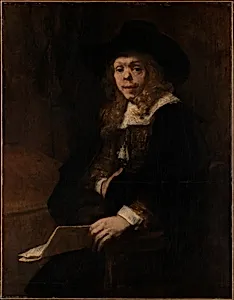
Medium
Oil on canvas
Dimensions
44 3/8 x 34 1/2 in. (112.7 x 87.6 cm)
Classification
Paintings
Department
Robert Lehman Collection
Museum
Metropolitan Museum of Art, New York, NY
Credit
Robert Lehman Collection, 1975
Accession Number
1975.1.140
Rights
Public Domain
Tags
Art Historical Context
In the late 1660s, Rembrandt van Rijn, unparalleled master of the Dutch Golden, captured the likeness of fellow artist Gerard de Lairesse in striking oil-on-canvas portrait. around 1665–, the painting measures 44 3/8 x 34 1/2 inches and now graces the Robert Lehman Collection at the Metropolitan Museum of Art De Lairesse, a painter and influential art theorist known for his classical ideals, gazes directly at the viewer with a poised intensity, his elegant attire and powdered wig reflecting the refined tastes of Amsterdam's intellectual circles during this prosperous era. Rembrandt's late style shines here through his signature chiaroscuro—dramatic contrasts of light and shadow that sculpt de Lairesse's face with emotional depth and psychological insight. Thick impasto strokes add texture to the subject's skin and garments, conveying a sense of immediacy and humanity. This period marked Rembrandt's artistic maturity, post-financial ruin, when he focused on intimate, character-driven portraits rather than grand commissions. A testament to the camaraderie among 17th-century Dutch artists, this work highlights Rembrandt's enduring genius for elevating the everyday to the profound, inviting viewers to ponder the shared ambitions of creator and subject alike.
About the Artist
Rembrandt (Rembrandt van Rijn) · 1606–1669
Rembrandt Harmenszoon van Rijn (1606–1669) stands as one of the greatest visual artists in the history of Western art and the most important Dutch painter of the 17th century. Born in Leiden to a prosperous miller's family, Rembrandt transformed painting through his revolutionary use of light and shadow, his psychological depth in portraiture, and his elevation of etching to a fine art. His approx...