
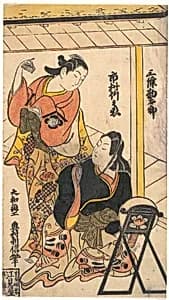
Portrait of Ichimura Takenojō and Sanjō Kantarō
ca. 1793
Medium
Tan-e (hand-colored print); ink and color on paper
Dimensions
H. 10 3/4 in. (27.3 cm); W. 6 in. (15.2 cm)
Classification
Prints
Culture & Period
Japan · Edo period (1615–1868)
Department
Asian Art
Museum
Metropolitan Museum of Art, New York, NY
Credit
Henry L. Phillips Collection, Bequest of Henry L. Phillips, 1939
Accession Number
JP2757
Rights
Public Domain
Tags
Art Historical Context
This hand-colored tan-e print from Japan's Edo period captures two kabuki actors, Ichimura Takenojō and Sanjō Kantarō, in an intimate moment involving a mirror. Created around 1793 by Okumura Toshinobu, the work reflects the vibrant world of theater that captivated urban audiences in Edo (modern Tokyo). Tan-e prints like this one were among the earliest forms of ukiyo-e, where artists applied pigments by hand—often featuring a distinctive reddish tan color—onto black-and-white woodblock impressions, giving each example a unique, painterly quality. Toshinobu's delicate use of ink and color highlights the actors' expressive faces and elaborate costumes, emphasizing the theatrical glamour and fleeting beauty central to ukiyo-e traditions. Such portraits served as affordable souvenirs for theatergoers, bridging popular entertainment with fine art and documenting the stars of the stage. As part of the Metropolitan Museum's Asian Art collection, this piece offers a window into 18th-century Japanese culture, where kabuki performances blended drama, dance, and social commentary. The inclusion of a mirror adds a layer of symbolism, perhaps alluding to themes of reflection, identity, or illusion in performance.
About the Artist
Okumura Toshinobu · 1690–1770
active ca. 1717–1750