
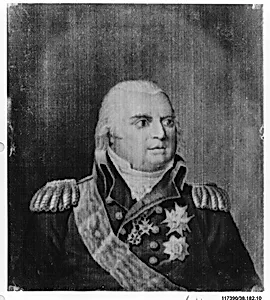
Portrait of Louis XVIII
early 19th century
Dimensions
H. 7 3/4 x W. 6 1/2 inches (sight) (19.7 x 16.5 cm)
Classification
Textiles-Velvets
Culture
French, Aix-en-Provence
Department
European Sculpture and Decorative Arts
Museum
Metropolitan Museum of Art, New York, NY
Credit
Rogers Fund, 1938
Accession Number
38.182.10
Rights
Public Domain
Tags
Art Historical Context
This exquisite *Portrait of Louis XVIII*, created in the early 19 century, is a finely wrought velvet textile attributed to Gaspard Gréire and Baron François Gérard. Measuring just 7¾ x 6½ inches, it belongs to the Metropolitan Museum of Art's European Sculpture and Decorative Arts collection, acquired through the Rogers Fund in 8. Hailing from French culture in Aix-en-Provence, this small-scale portrait exemplifies the era's luxurious textile arts, where skilled weavers captured regal likenesses in sumptuous velvet for elite homes or personal devotion. Louis XVIII (1755–1824), the Bourbon monarch who reclaimed the French throne during the Restoration period (1814–1830), symbolizes the return to monarchical stability after the upheavals of the Revolution and Napoleon's empire. Such portraits proliferated as emblems of loyalty and legitimacy, blending political propaganda with artistic finesse. Baron Gérard, a leading neoclassical portraitist favored by the court, likely provided the design, while Grégoire's textile expertise brought it to life in velvet—a medium prized for its rich texture and ability to render lifelike details through intricate weaving techniques. The artwork's cultural significance lies in its fusion of painting and craft, highlighting Aix-en-Provence's textile heritage. Visitors will appreciate how this intimate piece transforms a king's image into a tactile treasure, inviting reflection on France's turbulent early 19th-century history.