
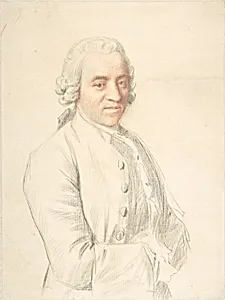
Portrait of Marc Liotard-Sarasin
1720–89
Medium
Red and black chalk.
Dimensions
8 7/8 x 6 5/8 in. (22.5 x 16.9 cm)
Classification
Drawings
Department
Drawings and Prints
Museum
Metropolitan Museum of Art, New York, NY
Credit
Purchase, Rogers Fund and David T. Schiff Gift, 1995
Accession Number
1995.402
Rights
Public Domain
Tags
Art Historical Context
Step into the refined world of 18th-century portraiture with JeanÉtienne Liotard'sPortrait of Marc Liot-Sarasin*, a drawing executed in red and black chalk. Liotard (1702–1789), a Swiss-born artist celebrated for his meticulous realism and association with the Rococo movement captured his subject—likely a family member or close associate—with intimate precision. This small-scale work (8 7/8 x 6 5/8 in.) exemplifies the preparatory sketches artists used before larger oil or pastel commissions, offering a glimpse into Liotard's studio practice during his formative years in Europe. The dual-chalk technique blends the warm, fleshy tones of sanguine (red chalk) for skin and drapery with the sharp contrasts of black chalk for outlines and shadows, creating a lifelike depth on paper. Common in the Baroque-to-Rococo transition, this medium allowed for subtle modeling and spontaneity, prized by collectors for its immediacy over painted finishes. Liotard's style, influenced by his travels to Constantinople and Italy, emphasized unflinching observation, making even modest drawings like this historically significant. Today, housed in the Metropolitan Museum of Art's Drawings and Prints department (acquired 1995 via Rogers Fund and David T. Schiff Gift), it invites visitors to appreciate the artistry behind grand portraits. A testament to personal connection amid Enlightenment portraiture, it highlights how chalk sketches bridged private study and public display.