
姿絵百人一首|Portraits for One Hundred Poems about One Hundred Poets (Sugata-e hyakunin isshu)
1695, fourth month
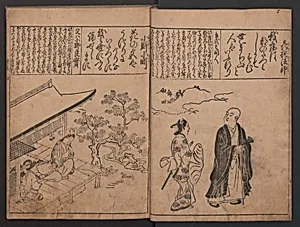
Medium
Set of three woodblock printed books; ink on paper
Dimensions
Each: 8 3/4 × 6 3/8 × 1/4 in. (22.2 × 16.2 × 0.6 cm)
Classification
Illustrated Books
Culture & Period
Japan · Edo period (1615–1868)
Department
Asian Art
Museum
Metropolitan Museum of Art, New York, NY
Credit
Rogers Fund, 1918
Accession Number
JIB26a–c
Rights
Public Domain
Tags
Art Historical Context
Hishikawa Moronobu *Portraits for One Hundred Poems about One Poets* (Sugata-e hyakunin isshu), created in 1695 Japan's Edo period, is a set of three woodblock books that brings to life the renowned anthology *Hyakunin Isshu*. This classic collection features one waka poem each from 100 poets spanning over 400 years, from ancient nobility to medieval figures. Moronobu, a pioneering master of ukiyo-e—the "pictures of the floating world" style depicting everyday beauty, theater, and poetry—illustrates these poets with elegant portraits of both men and women, often set amid trees symbolizing nature's harmony with verse. Printed in ink on paper, each slim volume measures just 8¾ × 6⅜ inches, making them intimate treasures designed for personal appreciation or social gatherings. Woodblock printing, refined in the Edo era, allowed affordable mass production, democratizing high culture amid rising urban literacy and merchant wealth. Moronobu's fluid lines and vibrant compositions capture the poets' graceful poses (*sugata*), blending portraiture with poetic essence. Housed in the Metropolitan Museum of Art's Asian Art department (Rogers Fund, 1918), this work exemplifies early ukiyo-e's fusion of literature and visuals, influencing generations of printmakers and underscoring poetry's enduring role in Japanese identity. Visitors will delight in its timeless celebration of human expression.
About the Artist
Hishikawa Moronobu 菱川師宣 (Japanese) · 1618 –1694
Japanese, 1618–1694