
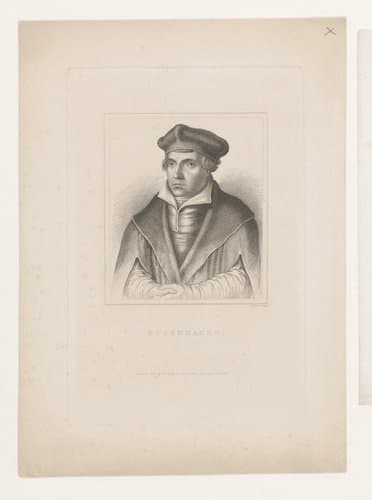
Portret van Christian Gottlieb Buder
1823
Medium
stipple engraving
Dimensions
152; 230
Rights
Public Domain
About this artwork
stippelgravure
Art Historical Context
Behold the elegant *Portret van Christian Gottlieb Buder*, stipple engraving crafted by Heinrich Meyer in 3. Measuring a modest 230mm by 152mm, this intimate portrait captures the likeness of its subject with remarkable finesse, reflecting the early 19th-century fascination with precise, reproducible imagery. Meyer, a skilled engraver, employs the stipple technique—known in Dutch as *stippelgravure*—to render subtle tones and textures through a constellation of fine dots, creating a soft, painterly effect that rivals traditional painting. Stipple engraving flourished in the late 18th and early 19th centuries as a versatile printmaking method, prized for its ability to convey shading and depth without harsh lines. This approach was especially suited to portraits, allowing for nuanced facial expressions and lifelike skin tones. Meyer's work exemplifies how such techniques democratized portraiture, enabling wider dissemination through books, albums, and private collections during Europe's Romantic era. Today, this piece invites us to ponder the era's blend of artistry and innovation, where a simple dot could immortalize a figure like Buder, bridging personal legacy with public appreciation. A testament to technical mastery, it reminds visitors of printmaking's enduring role in preserving history.