
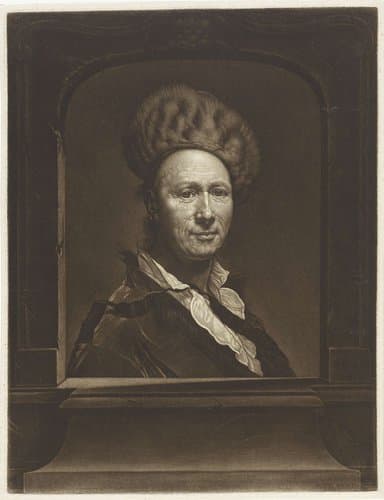
Portret van Conrad Friedrich Hurlebusch
1740 - 1774
Medium
paper
Dimensions
305; 233
Rights
Public Domain
About this artwork
mezzotint
Art Historical Context
This mezzotint portrait by Pieter Anthony Wakkerdak depicts Conrad Friedrich Hurlebusch and dates from the mid-eighteenth century. Executed on paper measuring 305 by 233 millimeters, the work reflects the period’s taste for intimate printed likenesses that could circulate among educated audiences. Wakkerdak’s choice of medium suggests an emphasis on tonal richness rather than line, allowing the subject’s features to emerge through subtle gradations of light and shadow. Mezzotint was prized in the 1700s for its velvety blacks and painterly effects, achieved by roughening the copper plate so that ink would cling to its textured surface. By smoothing selected areas, the artist created luminous highlights that give the portrait a sense of volume and presence. Such prints often served as affordable alternatives to paintings, spreading images of notable figures across Europe. As a surviving example of eighteenth-century graphic art, the sheet offers insight into the era’s blend of music, theater, and visual culture. Its modest scale and refined technique invite viewers to appreciate both the sitter’s individuality and the quiet skill of the printmaker who preserved it.
About the Artist
Pieter Anthony Wakkerdak · 1729–1774
Pieter Anthony Wakkerdak (1729–1774) was a Dutch printmaker, painter, draughtsman, publisher, and poet whose brief but productive career exemplified the versatility expected of 18th-century Dutch artists. Born on June 14, 1729, in Rotterdam and dying on November 28, 1774, in Delft at just forty-five years old, Wakkerdak worked across multiple media including mezzotint (black art), oil painting, en...