
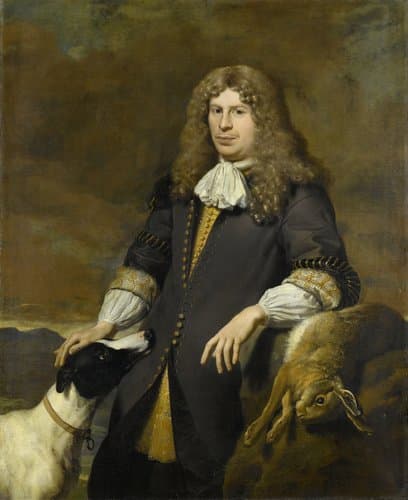
Portret van een man, mogelijk Jacob de Graeff, schepen van Amsterdam in 1672
1670
Medium
oil on canvas
Dimensions
130.5; 9; 106
Rights
Public Domain
About this artwork
signatuur en datum, rechtsonder: ‘K. du Iardin. fe 1670.’
Art Historical Context
This striking portrait by Karel du Jardin, signed and dated 1670 in the lower right, captures a dignified gentleman whose identity has been linked—though not conclusively—to Jacob de Graeff, an influential Amsterdam alderman. Du Jardin, primarily celebrated for his Italianate landscapes and genre scenes during the Dutch Golden Age, here showcases his versatility in formal portraiture. The large-scale oil on canvas format, measuring over a meter in height, was a favored medium of the period for conveying authority and permanence, its rich pigments allowing subtle modeling of fabrics and skin tones. Painted at the height of Amsterdam’s prosperity, the work reflects the era’s emphasis on civic pride and personal status. Portraits like this often commemorated individuals who shaped the city’s political and mercantile life, serving both as personal mementos and public declarations of virtue. The measured pose and attentive gaze invite viewers to consider the sitter’s role in a thriving republic. Today housed in the Rijksmuseum, the painting offers a window into seventeenth-century Dutch society, where art and identity intertwined. Its careful execution highlights du Jardin’s skill at blending realism with quiet elegance, rewarding close looking even centuries later.
About the Artist
Karel du Jardin · 1626–1678
Karel Dujardin, born in Amsterdam on September 27, 1626, was the son of the little-known painter Guilliam du Gardin. His early training came under the guidance of Nicolaes Berchem, a master whose influence is evident in Dujardin's animal and landscape depictions, while he was also inspired by the works of Paulus Potter. As a young artist, Dujardin traveled to Italy, where he immersed himself in th...