
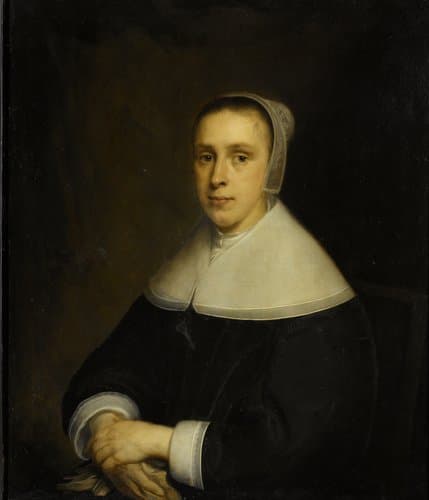
Portret van Elisabeth Vervoorn (1617-57)
Medium
oil on canvas
Dimensions
5; 73; 85
Rights
Public Domain
About this artwork
label, op de achterzijde: ‘Elizabeth Vervoorn / geboren 9 September 1617 / overleden 17 October 1657 / trouwt 9 Mei 1648. met / Mr. Johan van Someren / geboren 3 Juli 1622 / Raad Pensionaris van Nij[...] / hebb[...] / geboren [...] / trouwt [...] / Mr. Zeger[...] / Hoven va[...] / geboren [...]’
Art Historical Context
**Portrait of Elisabeth Vervoorn1617–1657)** *Cornelis Janssens van Ce I, 1650, oil on canvas, × 73 cm* This intimate portrait by Cornelis Janssens van Ceulen I Elisabeth Vervoorn, Dutch woman born in 1617 who lived through the height of the Dutch Golden Age. Painted in 1650, just two years after her marriage to. Johan van Someren prominent figure titled "Ra Pensionaris" (likely a legal advisor or council pensionary in a regional court)—the work reflects the era's emphasis on family lineage and social status. A handwritten label on the reverse provides touching biographical details: her birth on September 9, 1617; death on October 17, 1657; wedding on May 9, 1648; and notes on her husband's birth in 1622, hinting at descendants and connections to figures like Mr. Zeger, possibly a court official. Such inscriptions were common on family heirlooms, preserving personal histories amid 17th-century Europe's turbulent times. Janssens, a masterful portraitist who worked in both England and the Dutch Republic, excelled in the refined realism of the Golden Age tradition. Influenced by contemporaries like Rembrandt, he rendered subjects with meticulous attention to textures—fine lace, somber expressions, and dignified poses—that conveyed wealth and piety. Oil on canvas, the medium of choice for durable, luminous portraits, allowed for subtle glazing techniques that brought skin tones and fabrics to life, making this 85 × 73 cm panel a window into bourgeois life. Today, housed in Amsterdam's Rijksmuseum, it exemplifies how portraits served as status symbols and memorials, blending artistry with everyday human stories. Visitors, imagine gazing into Elisabeth's world—a reminder of lives marked by love, duty, and legacy.