
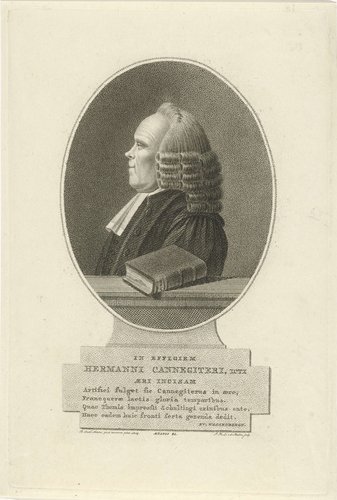
Portret van Herman Cannegieter
1804 - 1806
Medium
etching
Dimensions
215; 144
Rights
Public Domain
About this artwork
stippelets en ets
Art Historical Context
**Portret van Herman Cannegieter** is a refined portrait etching by Dutch artist Pieter van der Meulen, created between 1804 and 1806. Measuring a modest 215 mm by 144 mm, this intimate print captures the likeness of Herman Cannegieter, likely a notable figure from the Netherlands during the Napoleonic era. Van der Meulen, a skilled engraver active in Amsterdam, specialized in portraiture, producing works that bridged the Enlightenment's emphasis on individuality with the emerging Romantic interest in personal character. The artwork employs a combination of *stipple* (stippelets) and etching techniques, as noted in its description. Stippling uses fine dots to build subtle tones and textures, lending a soft, lifelike quality to the subject's features, while etching—created by biting acid into a metal plate—allows for precise lines and shading. This hybrid method was popular in early 19th-century printmaking, enabling affordable reproductions of portraits for a wider audience beyond oil paintings reserved for the elite. In the context of the Batavian Republic's turbulent transition to the Kingdom of Holland under French influence, such prints served both commemorative and propagandistic purposes, preserving the images of civic leaders like Cannegieter. Van der Meulen's meticulous technique highlights the era's technical innovation in graphic arts, making this piece a window into Dutch portrait traditions during a time of political change.
About the Artist
Pieter van der Meulen · 1638–1738
This artist went to London in 1670 where he painted battle scenes.