
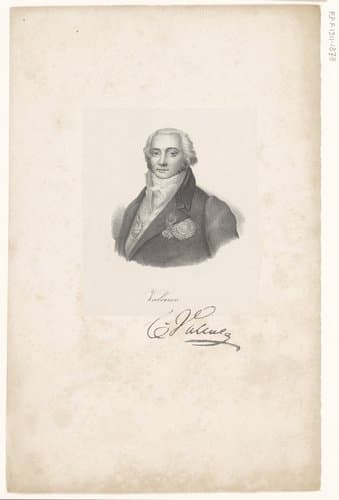
Portret van Jean-Baptiste Cyrus de Timbrune de Thiembronne, graaf van Valence
in of na 1818 - in of voor 1842
Medium
lithography
Dimensions
280; 181
Rights
Public Domain
About this artwork
lithografie
Art Historical Context
This elegant lithograph, titled *Portret van Jean-Baptiste Cyrus Timbrune de Thbronne, graaf Valence*, captures the likeness of a French nobleman and count during the early 19th century. anonymously by veuve Delpech (Naudet)—likely the widow of the Parisian printer and lithographer François-Sébastien Delpech—between1818 and 1842, it measures a modest 280 mm high by 181 mm wide, perfect for personal collections or display in aristocratic homes. Lithography, the innovative medium here, revolutionized printmaking after its invention in 1798. This technique allowed artists to draw directly on stone with greasy crayon, producing multiple high-quality impressions that captured fine details like textures and expressions with remarkable fidelity—far superior to earlier methods like engraving. In post-Napoleonic France, during the Bourbon Restoration and July Monarchy, such portraits democratized noble imagery, making elite likenesses accessible beyond oil paintings. As a window into Restoration-era aristocracy, this work reflects the enduring prestige of titles like "graaf van Valence" amid political shifts. Though anonymous, its craftsmanship highlights Delpech's studio legacy in producing refined, reproducible art that bridged fine art and popular culture.