
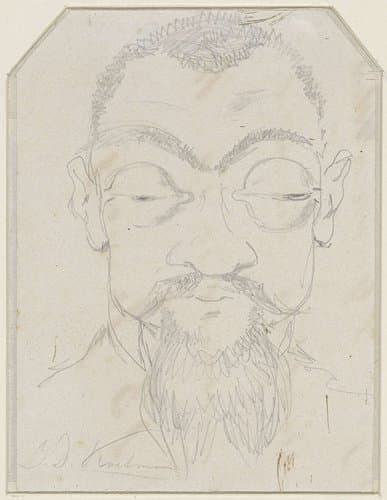
Portret van Joseph Hartogensis
1841 - 1857
Medium
paper
Dimensions
117; 158
Rights
Public Domain
About this artwork
Aankoop uit het F.G. Waller-Fonds
Art Historical Context
"Portret van Joseph Hartogensis" is a delicate 19th-century portrait by Dutch artist Johan Daniël Koelman (1818–1893), capturing the likeness of its namesake subject between 1841 and 1857. Rendered on paper in a compact format—158 mm high by 117 mm wide—this intimate work exemplifies the artist's skill in portraiture during a period when Dutch painting bridged Romanticism and emerging Realism. Koelman, known for his precise depictions of figures from everyday and bourgeois life, likely created this as a personal or commemorative piece, highlighting the era's emphasis on individual identity amid Holland's cultural and economic stability post-Napoleonic wars. The modest paper medium underscores its potential as a preparatory drawing, sketch, or miniature study, techniques valued for their portability and affordability compared to grand oil canvases. Such small-scale portraits were popular among the rising middle class, serving as cherished keepsakes or models for larger commissions. The date range suggests it may span Koelman's formative years, reflecting his evolving mastery of light, expression, and subtle modeling. Acquired through the F.G. Waller-Fonds, a fund supporting art collections, this piece preserves a slice of Dutch-Jewish cultural history, as Joseph Hartogensis appears tied to prominent communities. Visitors will appreciate its quiet elegance, inviting reflection on how everyday portraits immortalize personal stories in museum vaults.