
2111
1835
Medium
lithography
Dimensions
276; 360
Rights
Public Domain
About this artwork
collector's mark: Lugt 2228
Art Historical Context
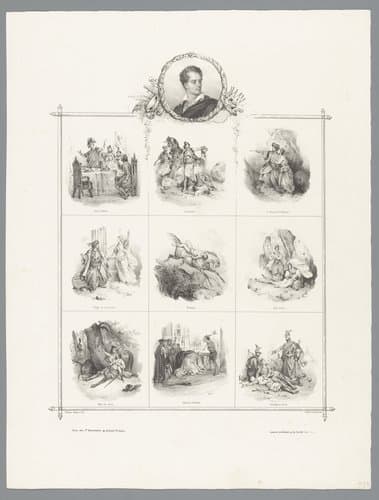
**Victor Adam's *2111* (1835)** into the vibrant world of19th-century French lithography with Victor Adam's *2111*, a finely executed print measuring 360mm high by 276mm wide. Created in 1835 during the July Monarchy, this work exemplifies Adam's prowess as a leading lithographer his era. Born in1801, Adam was for his lively genre scenes illustrations that captured the spirit of Parisian life, blending Romantic flair with keen observational detail. Lithography, a revolutionary technique invented just decades earlier, allowed artists like him to draw directly on stone with greasy crayon, producing rich tonal variations and multiples that made art more accessible to a growing middle class. The medium's significance shines here: unlike earlier intaglio prints, lithography offered fluid, painterly effects ideal for Adam's dynamic compositions. This sheet bears the collector's mark Lugt 2228, a hallmark of provenance from a distinguished European collection, underscoring its enduring value among connoisseurs. Though the exact subject remains enigmatic—possibly part of a numbered series—*2111* reflects the era's fascination with everyday vignettes, bridging fine art and popular illustration. Displayed in our virtual gallery, this piece invites you to appreciate how lithography democratized visual culture, preserving Adam's legacy amid France's cultural renaissance.
About the Artist
Victor Adam · 1801–1866
Victor Adam was born in Paris in 1801 and built a prolific and commercially successful career as one of the leading lithographers and illustrators of nineteenth-century France. He received a conventional academic training in painting, but it was the new medium of lithography — still in its first decades of widespread use when Adam came of age — that provided the ideal vehicle for his gifts: a faci...