
Portret van William Barlow
1743
Medium
etching
Dimensions
250; 354
Rights
Public Domain
About this artwork
height 354 mm x width 250 mm
Art Historical Context
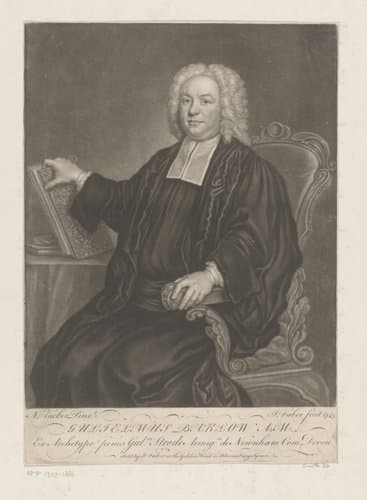
Step into the refined world of 18th-century British portraiture with *Portret van William Barlow*, striking etching by John Faber II, created in 1743. 354 mm high by 250 mm wide, print captures the poised elegance typical of the Rococo era, where detailed likenesses served as markers of social status and intellectual prestige. Faber II (1684–1756), a master engraver based in London, was renowned his reproductive prints that made elite paintings accessible to a wider audience through affordable multiples. Etching, the medium here, highlights Faber's technical prowess: acid etched into a metal plate creates precise, fluid lines that convey texture and depth with remarkable subtlety. Unlike painting, this intaglio process allowed for rich tonal variations, ideal for rendering fabrics, facial expressions, and the subtle play of light on Barlow's features. Produced during a time when printmaking democratized portraiture—bridging courtly art with emerging middle-class collectors—this work underscores etching's role in preserving and distributing images of notable figures like Barlow, possibly a scholar or cleric whose legacy endured posthumously. Though details on the sitter remain elusive, the portrait exemplifies how 18th-century engravers like Faber elevated print to high art, blending technical innovation with cultural commemoration. A testament to portraiture's enduring appeal!