
Pot met geometrische motieven
ca. -3000 - ca. -2000
Medium
formed
Dimensions
23.3; 9.8; 19.6
Rights
Public Domain
About this artwork
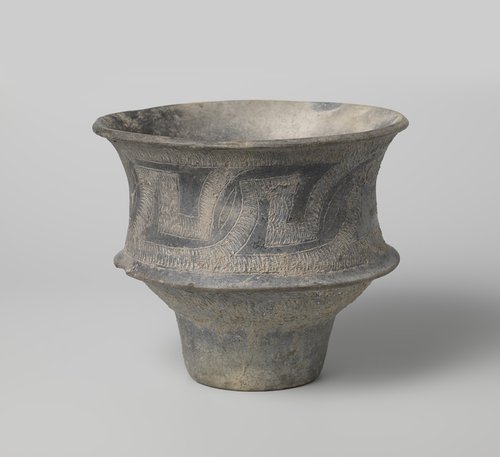
Pot met licht uitstaande mondrand, versierd met een band van geometrische motieven, deels glad en deels gearceerd.
Art Historical Context
This ancient ceramic vessel, known as *Pot met geometrische motieven*, dates to roughly 3000–2000 BCE and stands as a compelling example of early prehistoric craftsmanship. Measuring 19.6 cm in height with a diameter of 23.3 cm, the pot features a slightly flaring rim and a decorative band of geometric motifs. Some areas remain smooth while others display hatched textures, suggesting deliberate contrast achieved through simple incising or scraping techniques on the clay surface before firing. Created by anonymous makers, the work reflects a time when pottery served both practical and expressive purposes. The geometric patterns—likely applied by hand—point to an emerging artistic language that valued symmetry, repetition, and texture. Such designs may have held symbolic meaning or simply enhanced the vessel’s visual appeal, transforming a utilitarian object into something more meaningful. As one of the earliest forms of decorated ceramics, this pot offers a window into prehistoric communities that experimented with form and ornament long before written records. Its modest scale and refined detailing invite viewers to appreciate the skill involved in shaping and embellishing clay by hand, a foundational technique that would influence ceramic traditions for millennia.