
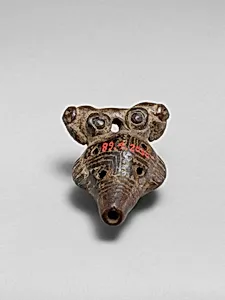
Pottery Whistle
Unknown Artist
ca. 800–1500
Medium
Clay
Dimensions
L. 4.9 cm (2 in.); W. 4.3 cm (1-3/4 in.); H. 3.4 cm (1-3/8 in.); Wt. 26 g
Classification
Aerophone-Whistle Flute-whistle
Culture & Period
Costa Rican · Pre-Columbian
Department
Musical Instruments
Museum
Metropolitan Museum of Art, New York, NY
Credit
The Crosby Brown Collection of Musical Instruments, 1889
Accession Number
89.4.2690
Rights
Public Domain
Art Historical Context
Nestled in the Metropolitan Museum of Art's Crosby Brown Collection of Musical Instruments this petite Pottery Whistle from Pre-Columbian Costa Ricaca. 800–1500) exemplifies the ingenuity of indigenous artisans. Crafted from clay, it measures just 4.9 cm long, 4.3 cm wide, and 3.4 cm high, weighing a mere 26 grams—small enough to fit in the palm of your hand. Classified as an aerophone, specifically a whistle flute, it produces sound when air is blown through an opening, blending pottery craftsmanship with musical function. In Costa Rican Pre-Columbian societies, such whistles were more than playthings; they likely served in rituals, ceremonies, or daily communication, reflecting a rich tradition of sonic artistry. The unknown artist's skillful molding of clay into a functional form highlights advanced ceramic techniques, including firing to achieve durability. These objects offer a window into vibrant indigenous cultures before European contact, where music intertwined with spirituality and community life. Today, this whistle invites us to ponder the sounds of ancient Costa Rica—perhaps a bird-like trill or haunting melody echoing through rainforests. A testament to everyday creativity, it reminds visitors of the universal human impulse to make music from the earth itself.