
Pouch
Unknown Artist
ca. 1860
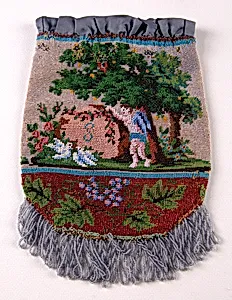
Medium
Glass, silk, linen
Classification
Pouch
Culture
American
Department
Costume Institute
Museum
Metropolitan Museum of Art, New York, NY
Credit
Brooklyn Museum Costume Collection at The Metropolitan Museum of Art, Gift of the Brooklyn Museum, 2009; Gift of Mrs. C. Elliott Sanford, 1945
Accession Number
2009.300.4504
Rights
Public Domain
Tags
About this artwork
This glass, silk, linen, created in ca. 1860, represents significant artistic achievement by Unknown Artist, whose work. The piece demonstrates the technical capabilities and aesthetic conventions of this art during this historical period. Working in glass, silk, linen, the artist employed materials and techniques characteristic of the era, creating visual effects that convey both subject matter and artistic vision. Museum collections preserve such works to ensure continued study and appreciatio...
Art Historical Context
This delicate pouch, crafted around 1860 by an unknown artist, exemplifies the exquisite craftsmanship of mid-19th-century fashion accessories. Made from glass beads, silk, and linen, it as a stylish evening bag—known as a reticule women attending social events. The shimmering glass beads, likely sewn onto silk with fine linen lining, created a luxurious texture and subtle sparkle, reflecting the era's fascination with opulent yet refined personal adornments. Housed in the Costume Institute at The Metropolitan Museum of Art, the pouch bears a charming Cupid motif, evoking themes of love and romance central to Victorian sentimentality. During the 1860s, amid the Civil War's turbulence, such items offered a touch of escapism and femininity, showcasing technical skill in beadwork that blended functionality with artistry. These pouches were essential for carrying essentials like fans or handkerchiefs, highlighting evolving women's fashion toward smaller, decorative handbags. Preserved through the Brooklyn Museum Costume Collection and gifted to the Met, this pouch invites us to appreciate everyday artistry from a pivotal American moment. Its survival underscores the cultural value of costume artifacts, bridging personal stories with broader historical narratives of style, emotion, and innovation.