
Prang's Progressive Proofs
1895
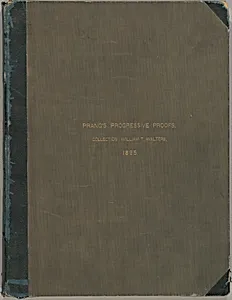
Medium
bound volume with twenty-eight monochromatic lithographs and thirty chromolithographs
Dimensions
overall (closed): 39.05 × 29.85 × 2.54 cm (15 3/8 × 11 3/4 × 1 in.)
Classification
Volume
Department
CG-W
Museum
National Gallery of Art, Washington, D.C.
Credit
Corcoran Collection
Accession Number
2015.143.1423
Rights
Public Domain
Art Historical Context
Step into the enchanting world of 19th-century printmaking with *Prang's Progressive Proofs*, masterful bound volume created by Louis Pr in 1895. Prang, often hailed as the father of American chromolith, produced this educational treasure as part of his pioneering efforts at his Boston-based firm, which revolutionized color printing in the United States. Housed in the National Gallery of Art's Corcoran Collection, this volume (39.05 × 29.85 × 2.54 cm when closed) contains twenty-eight monochromatic lithographs and thirty chromolithographs, offering a rare glimpse into the intricate artistry of mass-produced color images. The heart of the work lies in its "progressive proofs"—sequential stages revealing how chromolithography builds vibrant hues through layered lithographic stones, each inked in a single color from grayscale foundations to full-spectrum brilliance. This technique, perfected by Prang, allowed for stunning reproductions of paintings, illustrations, and holiday cards, democratizing art for everyday Americans during the Gilded Age. Culturally, *Prang's Progressive Proofs* underscores the era's printing boom, blending scientific precision with artistic flair. It not only showcases Prang's technical genius but also highlights chromolithography's role in shaping visual culture, from advertising to fine art reproductions, making high-quality color accessible beyond elite canvases. A testament to innovation, it invites visitors to appreciate the hidden labor behind every vivid print.