
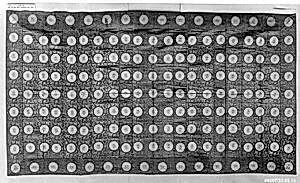
Priest's Robe
Unknown Artist
18th century
Medium
Silk, metallic thread
Dimensions
H. 46 1/2 x W. 84 in. (118.11 x 213.36 cm)
Classification
Textiles-Costumes
Culture & Period
Japan · Edo period (1615–1868)
Department
Asian Art
Museum
Metropolitan Museum of Art, New York, NY
Credit
Gift of E. G. Kennedy, 1932
Accession Number
32.65.15
Rights
Public Domain
Art Historical Context
This exquisite *Priest's Robe* from 18th-century Japan, during the Edo period (5–1868), the era's mastery of luxurious textiles. Made of shimmering silk embroidered with metallic threads, the robe measures an impressive 46½ x 84 inches (118.11 x 213.36 cm), designed to drape elegantly over a priest's form during rituals. Donated to the Metropolitan Museum Art in 1932 by E. G. Kennedy, it now resides in the Asian Art department classified as a textile costume. The Edo period was a time of relative peace and cultural flourishing under the Tokugawa shogunate, when Buddhist and Shinto priests wore such opulent garments to symbolize spiritual purity and divine authority. Silk, prized for its softness and luster, combined with metallic threads—likely gold or silver—created a radiant effect that caught the light in temple ceremonies, elevating the wearer's presence. Artistically, the use of metallic embroidery techniques highlights Japanese textile innovation, where threads were meticulously couched to prevent fraying and ensure durability. These robes were not mere clothing but sacred objects, blending functionality with breathtaking artistry that reflected Japan's refined aesthetic sensibilities. Visitors, imagine the soft glow of candlelight dancing on its surface during a midnight prayer!