
ca. 1762
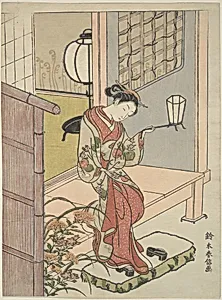
Medium
Woodblock print; ink and color on paper
Dimensions
10 3/4 x 7 7/8 in. (27.3 x 20 cm)
Classification
Prints
Culture & Period
Japan · Edo period (1615–1868)
Department
Asian Art
Museum
Metropolitan Museum of Art, New York, NY
Credit
The Howard Mansfield Collection, Purchase, Rogers Fund, 1936
Accession Number
JP2446
Rights
Public Domain
Tags
Art Historical Context
Suzuki Harunobu's *Print* (ca. 1762) is a exquisite example of Edo-period ukiyo-e, the "pictures of the floating world" that captured Japan's vibrant urban culture during the 17th–19th centuries. Created amid the prosperous Tokugawa shogunate, when woodblock prints became affordable art for the masses, this work reflects the era's fascination with beauty, fashion, and everyday elegance. Harunobu, a master of the genre, pioneered full-color nishiki-e prints around this time, using intricate layering of ink and pigments to achieve subtle gradients and lifelike hues on paper. Measuring just 10 3/4 x 7 7/8 inches, this intimate woodblock print showcases Harunobu's signature style: delicate figures of women, often courtesans or ladies of leisure, rendered with soft lines and poetic grace. The technique involved carving multiple wooden blocks—one for each color—and precise registration to align them flawlessly, revolutionizing printmaking and influencing later artists like Hiroshige and Hokusai. Housed in the Metropolitan Museum of Art's Asian Art Department from the Howard Mansfield Collection, this piece highlights women's roles in Edo society, from their elaborate kimonos to poised expressions. It invites visitors to appreciate how such prints democratized art, blending sensuality and artistry in a cultural snapshot of 18th-century Japan.
About the Artist
Suzuki Harunobu · 1725–1770
Suzuki Harunobu (c. 1725-1770) was a Japanese ukiyo-e artist who revolutionized woodblock printing by developing nishiki-e—full-color prints using multiple woodblocks—in 1765. Before Harunobu, Japanese prints were limited to two or three colors; his innovation unleashed the entire artist's palette, transforming ukiyo-e into the vibrant art form that would later captivate Western artists from Manet...