
Processional banner
Unknown Artist
ca. 1516
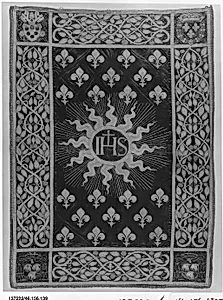
Medium
Silk and metal thread on silk
Dimensions
H. 51 x W. 36 1/2 inches (129.5 x 92.7 cm)
Classification
Textiles-Embroidered
Culture
French or Italian
Department
European Sculpture and Decorative Arts
Museum
Metropolitan Museum of Art, New York, NY
Credit
Fletcher Fund, 1946
Accession Number
46.156.139
Rights
Public Domain
Tags
Art Historical Context
This exquisite processional banner, dating to around 1516, hails from either France or Italy during the Renaissance—a time when elaborate textiles adorned religious ceremonies, civic parades, and noble events. Measuring over four feet tall, it likely served as a heraldic standard, proudly displaying a coat of arms that symbolized a prominent family, guild, or. Such banners were carried aloft in processions, their vibrant designs catching the light and eye of onlookers, blending artistry with public proclamation of status and piety. Crafted from silk embroidered with silk and metal threads, the banner exemplifies the opulent textile techniques of the era. Metal threads—often gold or silver—added a shimmering, jewel-like quality, enhancing durability for outdoor use while mimicking the luxury of illuminated manuscripts or painted altarpieces. Embroiderers employed couching and laid work to secure these precious filaments, creating raised, textured surfaces that would gleam under torchlight or sunlight. As a rare survivor from the early 16th century, this piece highlights the cultural prestige of embroidered textiles in European decorative arts. Now housed in The Metropolitan Museum of Art's European Sculpture and Decorative Arts collection (acquired via the Fletcher Fund in 1946), it invites us to imagine the pageantry of Renaissance life, where every stitch told a story of heritage and devotion.